Touch and move beads
Children learn what each bead is worth by moving it with their own fingers.
Soroban-style abacus
Upper bead = 5.
Each lower bead = 1.
Beads touching the bar are counted.
Why abacus works
A soroban rod works like a place-value column. The class method connects physical movement with mental images over time.
Children learn what each bead is worth by moving it with their own fingers.
The rod position and bead movement help the number take shape in front of them.
Small sums and worksheets help the child repeat the same idea without rushing.
With practice, children begin to picture the beads and calculate without counting on fingers.
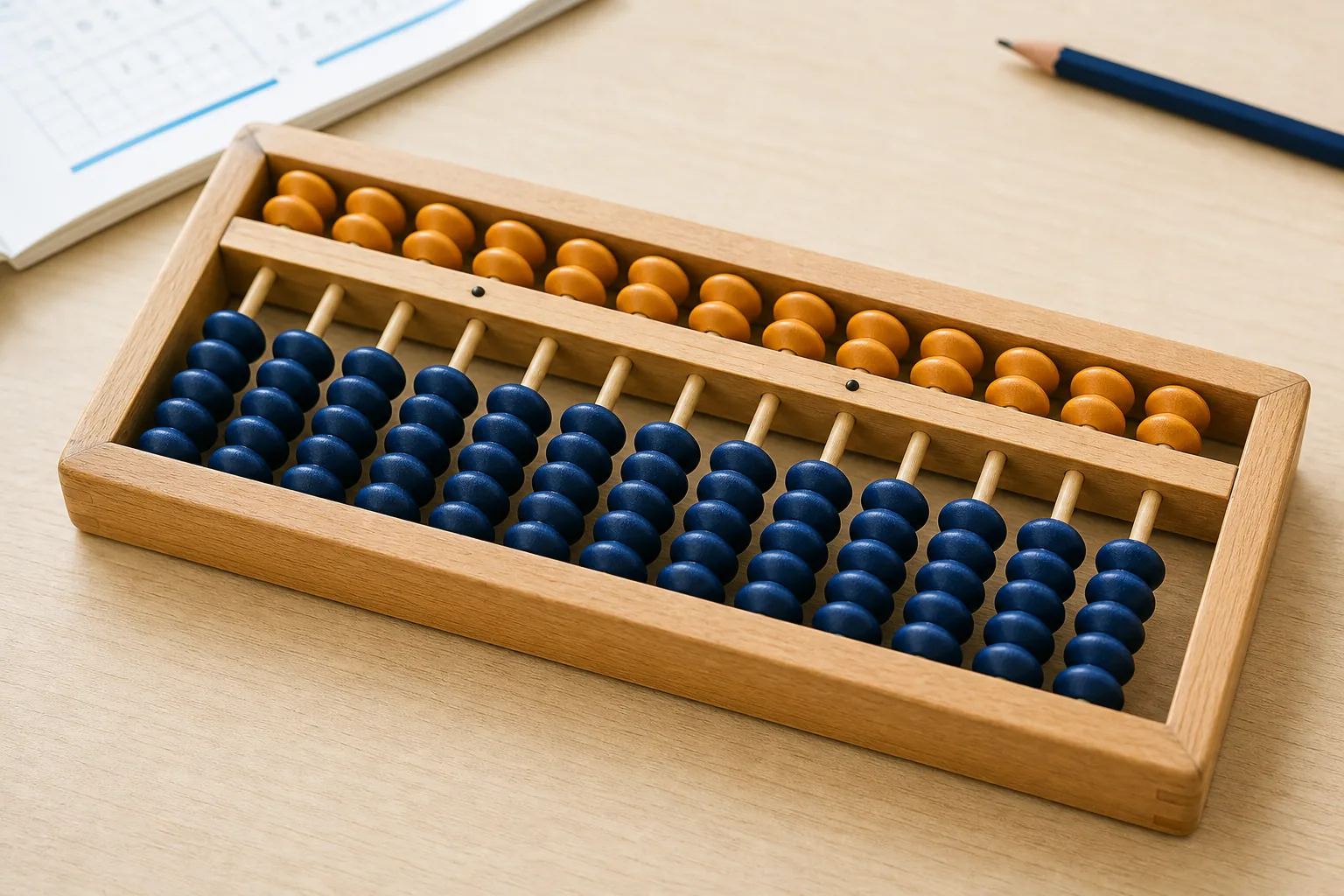
The frame makes place value visible before the child moves into mental images.
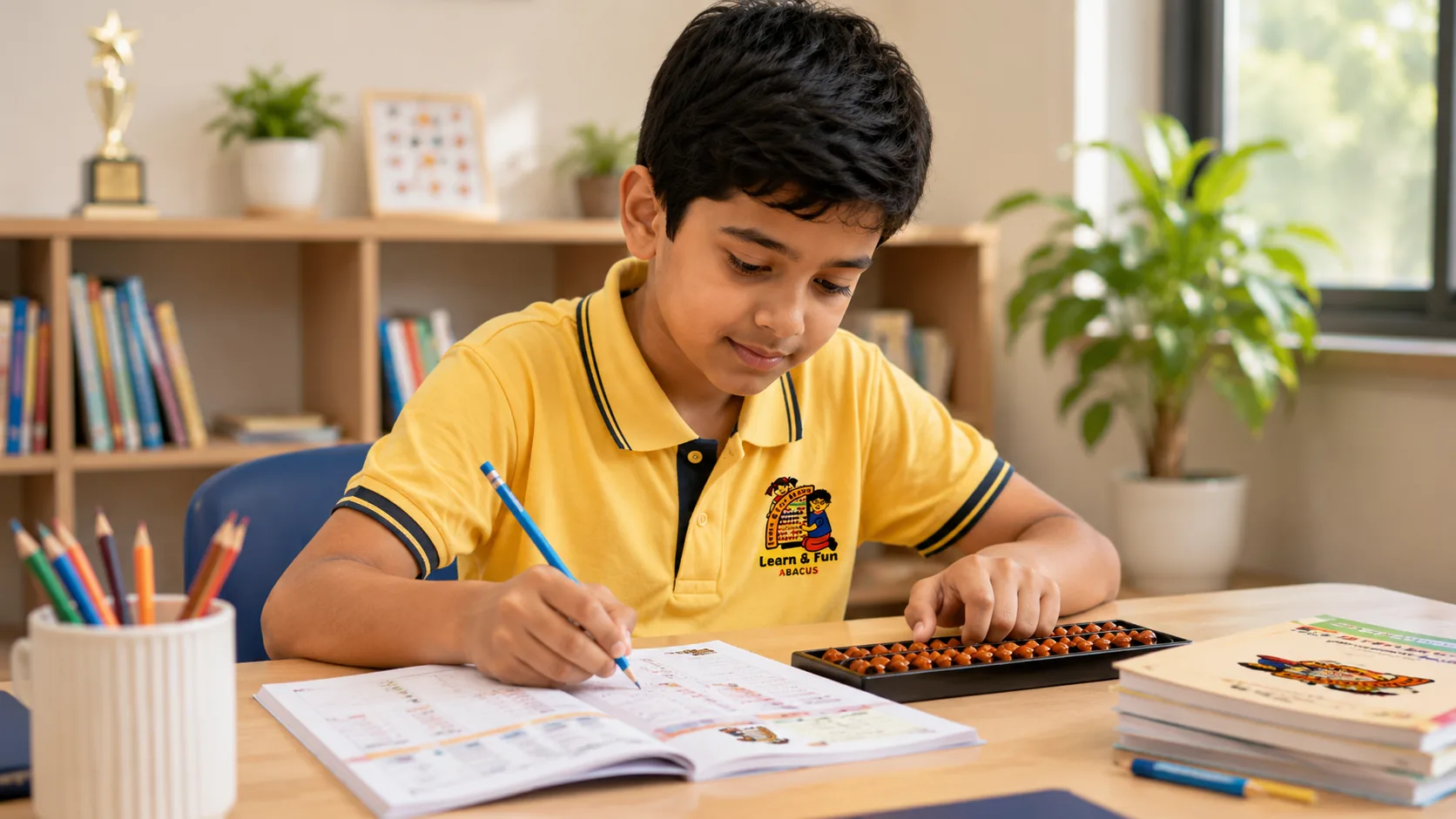
Worksheet practice helps transfer bead understanding into written work.
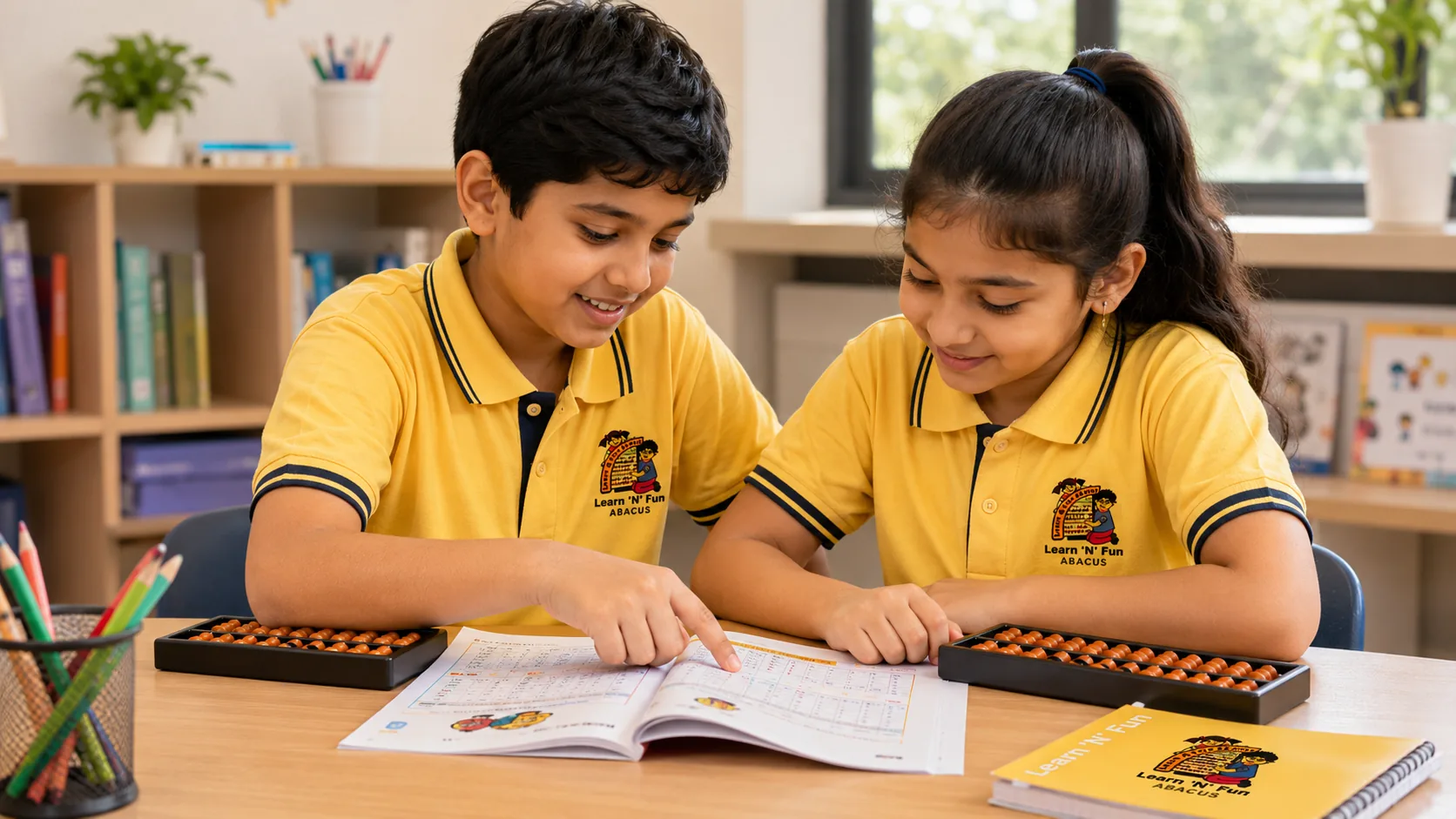
Short, repeated tasks help children build comfort without rushing.
Book a free demo class. Your child can try bead movement, a few simple sums, and a short practice task.